
The short version
Researchers pooled the step counts of 47,471 adults from 15 studies and followed them for a median of about seven years. Adults who took more steps a day were less likely to have died from any cause during that time. For adults 60 and older, the difference kept growing up to roughly 6,000 to 8,000 steps a day and then levelled off. For younger adults it kept growing to roughly 8,000 to 10,000.
This is a finding about groups of people over time. It cannot tell you what would happen to you, or that adding steps would cause a longer life.
What the research found
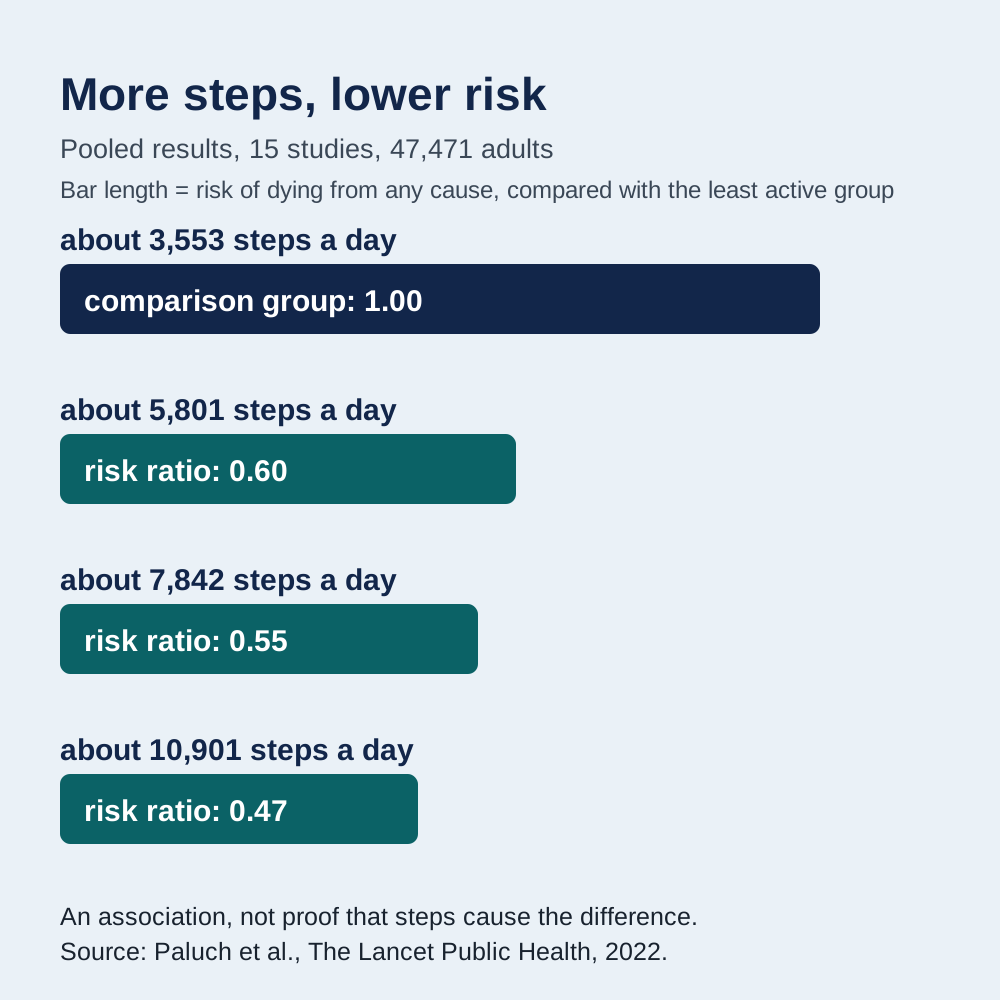
The researchers split adults into four groups of equal size by how many steps they took. Compared with the least active group, the risk of dying from any cause during follow-up was lower in each more active group.
| Group | Typical steps a day | Risk compared with the least active group |
|---|---|---|
| Least active fourth | about 3,553 | 1.00 (the comparison) |
| Second fourth | about 5,801 | 0.60 |
| Third fourth | about 7,842 | 0.55 |
| Most active fourth | about 10,901 | 0.47 |
What the pattern suggests
The biggest step in the pooled results was from the least active group to the next one, about 2,000 more steps a day. After that the differences were smaller. That fits the guidelines' plain message that some activity is better than none, and that a little more counts.
It is not a promise that a person who moves from 3,500 to 5,800 steps will gain any particular benefit, and the analysis cannot separate the effect of walking from the other ways active people differ.
Where does 10,000 come from?
The authors of the pooled analysis note that 10,000 steps a day is widely promoted, but that there was little evidence for that specific number. Their results did not find that 10,000 was a threshold, and for adults 60 and older the curve had levelled off by about 6,000 to 8,000.
That does not make 10,000 harmful. It means it is a round number, not a line the research drew.
A second study, from the United States
In a separate study of 4,840 U.S. adults aged 40 and older, followed for about 10 years, people who took 8,000 steps a day had a lower risk of dying from any cause than people who took 4,000 (a ratio of 0.49), and 12,000 steps was lower still (0.35).
After the researchers accounted for the total number of steps, faster stepping was not significantly linked to a lower risk. In that study, the total count was the useful number. The average age was about 57, so it tells us less about people in their late 70s and 80s.
What this does not tell you
A gentle way to find your number
This is our own example, not a researched protocol. Use your phone or a simple step counter for three ordinary days and note the average. Then add a little.
Try adding 500 to 1,000 steps a day, hold that for a week, and repeat if it felt comfortable. If it felt hard, stay where you are for another week. Indoor walking, a walk with someone, or two short walks all count. If you do not count steps, minutes work too: the Walking Progress Planner builds a week-by-week plan from a walk you can do now.
When to ask a clinician first
Try it today
Small, reviewed steps you can start now. Choose one, or save it for later.
Take a comfortable 10-minute walk
About 10 minutes · Easy
Choose a familiar, safe route and walk at a pace that feels comfortable today.
- How to start
- Step outside, pick a familiar route, and set a 10-minute timer. Turn around at the halfway point.
- You will need
- Comfortable shoes and a route you already know.
- How hard
- Easy: a pace where you can still talk comfortably.
- Done when
- You walked for about ten minutes, or as long as felt comfortable.
Involves: being outdoors.
Safety: Use a route and pace that are appropriate for you. Stop for a new concerning symptom.
Evidence strength: strong. General information, not medical advice.
Learn more: Fitness after 50
Take a comfortable 10-minute walk indoors
About 10 minutes · Easy
Walk at a comfortable pace around your home, a hallway, or a shopping center, and stop when the time is up.
- How to start
- Choose a loop indoors that is clear and well lit, and set a 10-minute timer.
- You will need
- Comfortable shoes and a clear path indoors.
- How hard
- Easy: a pace where you can still talk comfortably.
- Done when
- You walked for about ten minutes, or as long as felt comfortable.
Safety: Use a route and pace that are appropriate for you. Stop for a new concerning symptom.
Evidence strength: strong. General information, not medical advice.
Learn more: Fitness after 50
Walk with someone for fifteen minutes
About 15 minutes · Easy. Keep the pace comfortable enough to talk.
Invite one person, in person or by phone, to walk with you for about fifteen minutes.
- How to start
- Send one message: "Would you like to walk with me for fifteen minutes today?"
- You will need
- A person to invite and a safe place to walk. A phone call counts if you cannot walk together.
- How hard
- Easy. Keep the pace comfortable enough to talk.
- Done when
- You walked, or talked by phone while you walked, for about fifteen minutes.
Involves: contacting other people, being outdoors.
Safety: Choose a person and a place that feel safe, and a pace that is comfortable for both of you.
Evidence strength: moderate. General information, not medical advice.
Learn more: Staying connected after 50
Where to go next
- Walking Progress Planner A gradual week-by-week plan
- Walking after 50
- Weekly Activity Check
- How much exercise do adults over 50 need?
- Effort Check: the talk test How hard should a walk feel?