
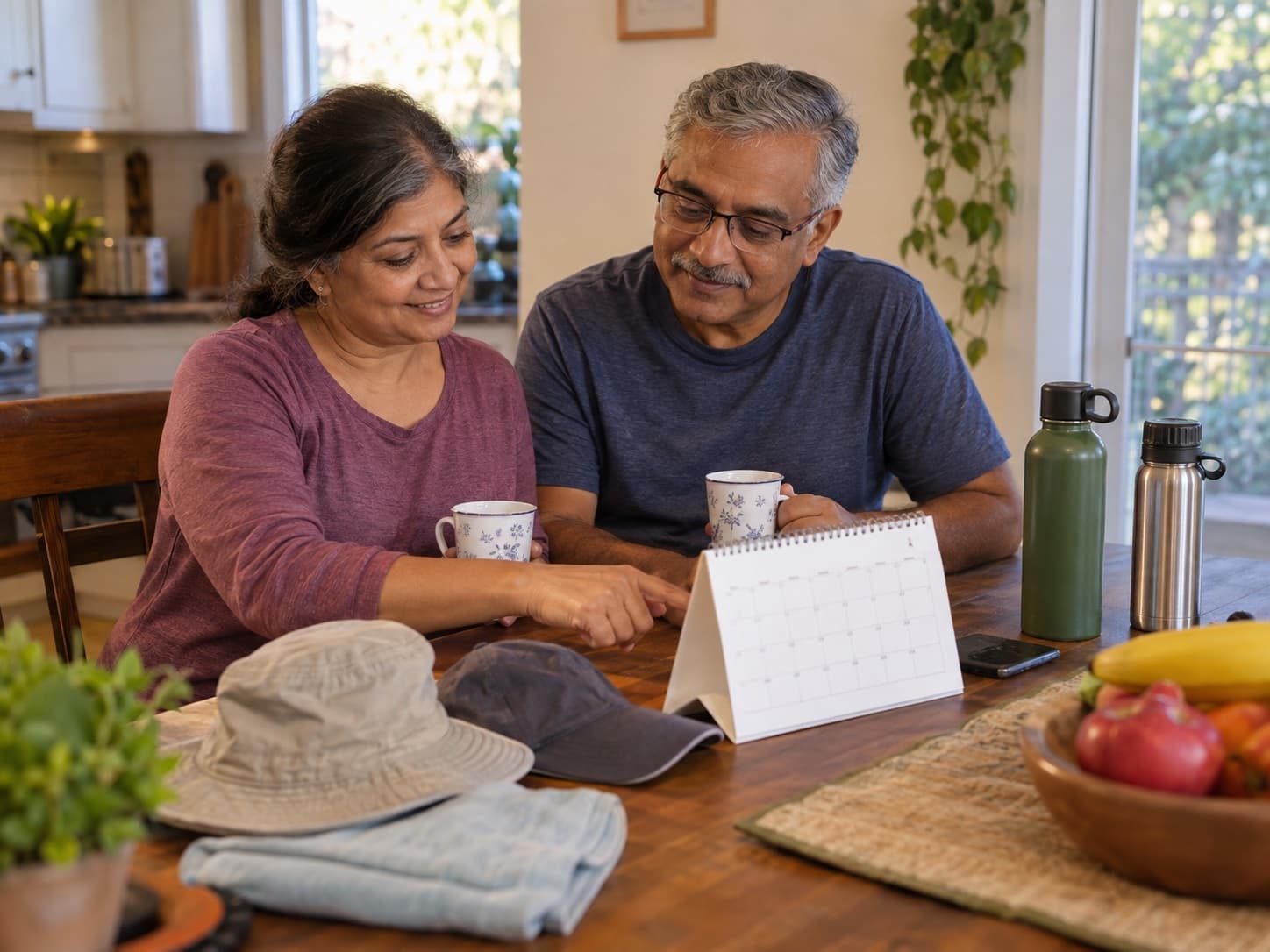
Motivation fading is normal, not a personal failure
Nearly every Fit after 50 member who starts something will, at some point, feel less like doing it than they did in week one. That is not a sign the plan was wrong or that you lack discipline; it is what motivation does for almost everyone, for almost anything.
What tends to help more than willpower
This is Fit after 50's own practical approach, built from common patterns, not a researched protocol. Deciding in advance, rather than in the moment: which days, what time, what exactly you will do. Making the easy version the default (a shorter walk still counts) so a bad day does not become a missed week. Doing some activities with another person, since a plan that depends only on your own mood is easier to skip than one where someone is expecting you.
| Question | What the guidelines say |
|---|---|
| Does a short session still count? | Yes: any amount of moderate-to-vigorous activity counts toward the week. |
| Do I have to hit a number to make progress? | No: some activity is better than none, at any starting point. |
What to do after a missed day
The most common reason people stop entirely is not the missed day itself, it is treating one missed day as proof the plan failed. The next scheduled day is the plan; nothing has to be made up. See Getting Back After a Break for restarting after a longer gap.
What this does not tell you
This is not a claim that any specific technique (habit trackers, streaks, rewards) is proven to work for you personally; the research on how long habits take to form varies too widely to give an honest number. Fit after 50 does not use streaks or guilt-based reminders for this reason.
Try it today
Small, reviewed steps you can start now. Choose one, or save it for later.
Take a comfortable 10-minute walk
About 10 minutes · Easy
Choose a familiar, safe route and walk at a pace that feels comfortable today.
- How to start
- Step outside, pick a familiar route, and set a 10-minute timer. Turn around at the halfway point.
- You will need
- Comfortable shoes and a route you already know.
- How hard
- Easy: a pace where you can still talk comfortably.
- Done when
- You walked for about ten minutes, or as long as felt comfortable.
Involves: being outdoors.
Safety: Use a route and pace that are appropriate for you. Stop for a new concerning symptom.
Evidence strength: strong. General information, not medical advice.
Learn more: Fitness after 50
Walk with someone for fifteen minutes
About 15 minutes · Easy. Keep the pace comfortable enough to talk.
Invite one person, in person or by phone, to walk with you for about fifteen minutes.
- How to start
- Send one message: "Would you like to walk with me for fifteen minutes today?"
- You will need
- A person to invite and a safe place to walk. A phone call counts if you cannot walk together.
- How hard
- Easy. Keep the pace comfortable enough to talk.
- Done when
- You walked, or talked by phone while you walked, for about fifteen minutes.
Involves: contacting other people, being outdoors.
Safety: Choose a person and a place that feel safe, and a pace that is comfortable for both of you.
Evidence strength: moderate. General information, not medical advice.
Learn more: Staying connected after 50
Where to go next
- How much exercise do adults over 50 need?
- Getting back after a break
- Overcoming the fear of starting
- Steady Start program A structured plan that removes daily decisions